
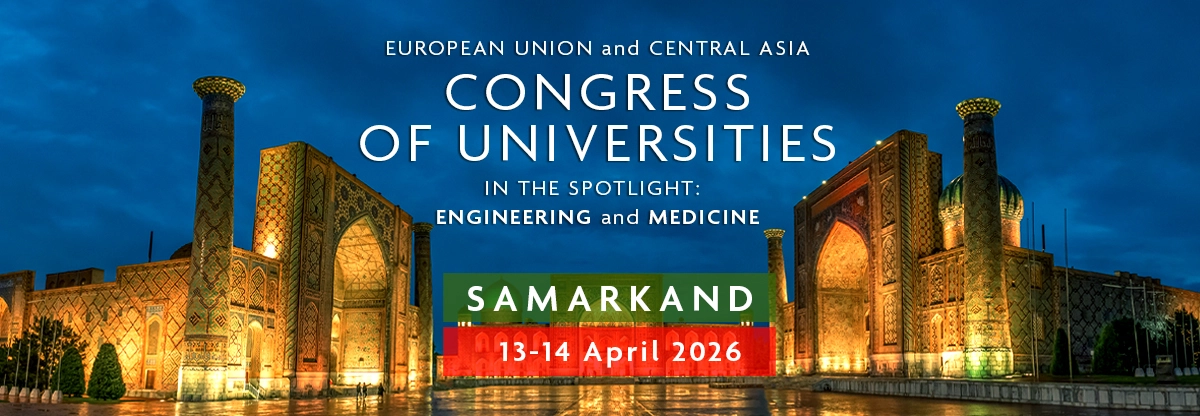
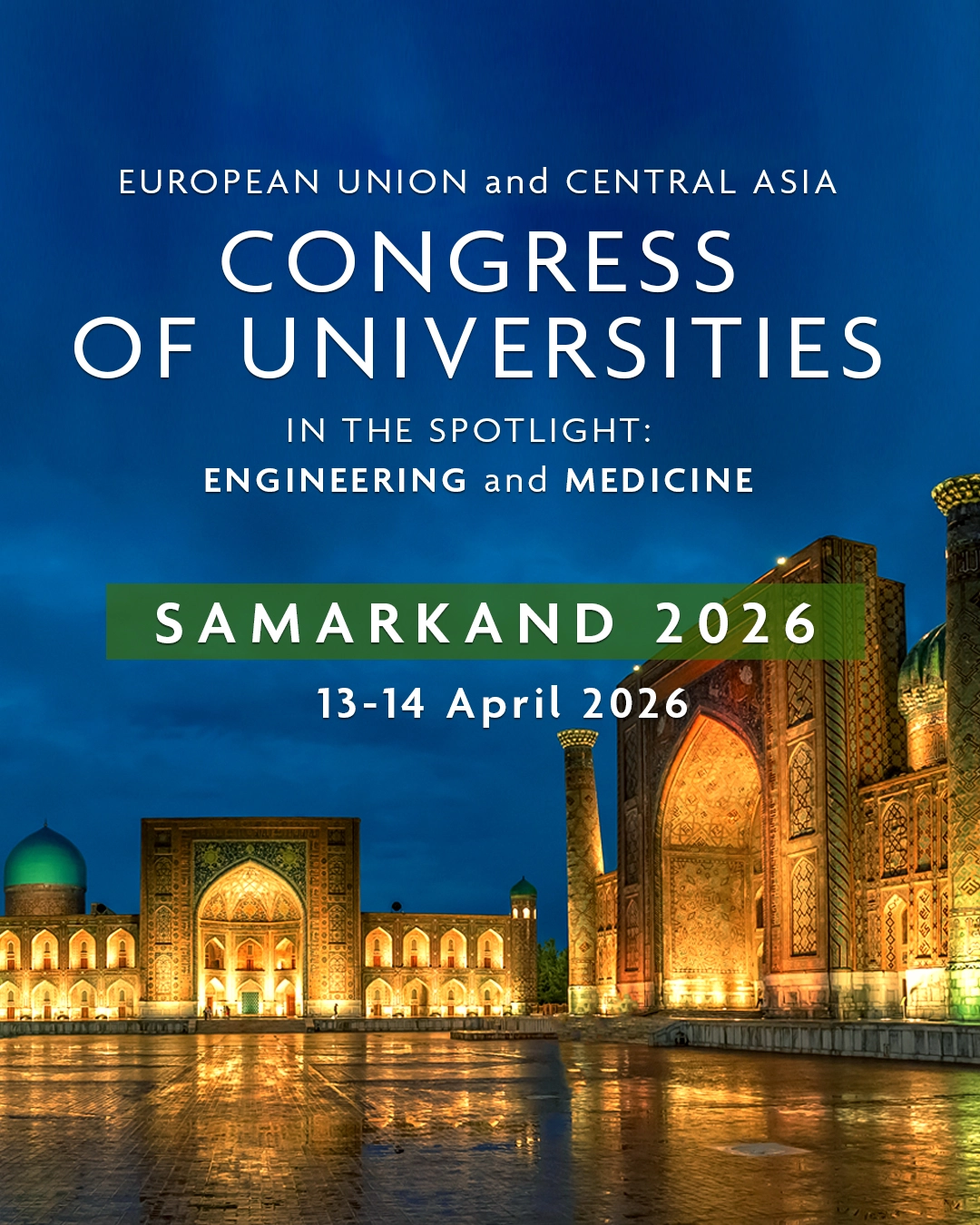
The aim of the Congress in the historical city of Samarkand in April 2026 is to provide a forum where universities and research centers in the European Union and five countries of the Central Asia can build grounds for a closer cooperation, especially (but not exclusively) in the fields of engineering and medicine.
Central Asia, due to its growing economy, rich natural resources and impressive demographics as well as geopolitics has become a region of significant importance. Not surprisingly the leaders of the European Union travelled to Samarkand last April to met with presidents of Uzbekistan, Kazakhstan, Kyrgyzstan, Tajikistan and Turkmenistan. Together they announced a strategic partnership between European Union and Central Asia.
The declaration of partnership focuses on transport, energy, and digital projects, but it also provides for deepening cooperation in education and science. The Congress in Samarkand will be an important step in this direction. The academic staff in the region believe that cooperation with European universities is the best way to raise the standard of their institutions.
The countries of the region, once part of the Soviet Union, have been undergoing processes for several years bringing them closer to Europe. The visit of Uzbekistan president Shavkat Mirziyoyev to Brussels last November led to significant broadening of the bilateral cooperation between Uzbekistan and the EU. Already well over a decade ago, then-leader of Kazakhstan, Nazarbayev, announced a program with the telling title "the Road to Europe." For years, children in Kazakhstan and Uzbekistan have been learning English from the first grade.
The European Union sees Central Asia as a promising economic and trade partner. Central Asia has what Europe lacks: gas, oil, uranium ore, as well as rare earth elements. When it comes to education, the fact that young people constitute the largest demographic group in Central Asian societies, these countries have particular interest in cooperation in the field of higher education.
Universities from the CA and EU countries have long collaborated. Now is the time to expand this collaboration and give it new impetus, particularly in the areas of engineering and medicine, the areas of particular interest to partners from both regions.
The Congress in Samarkand scheduled 13-14 April, 2026 is organized by the Ministry of Higher Education, Science and Innovation of Uzbekistan and the Perspektywy Education Foundation of Poland.
For those interested in learning more about Uzbekistan there will be an additional pre- and post-conference program.
Details are coming soon.